afootwego-03-restaurant-bills-in-australia
afootwego Restaurant Bills in Australia: What You Need to Know Before You Dine Out
…for people who love to walk…
Supporting Mindful and Responsible Travel
Restaurant Bills in Australia are changing – here’s what You need to know before you dine out…
Restaurant Bills in Australia:
What You Need to Know Before You Dine Out
June 2026
7¼
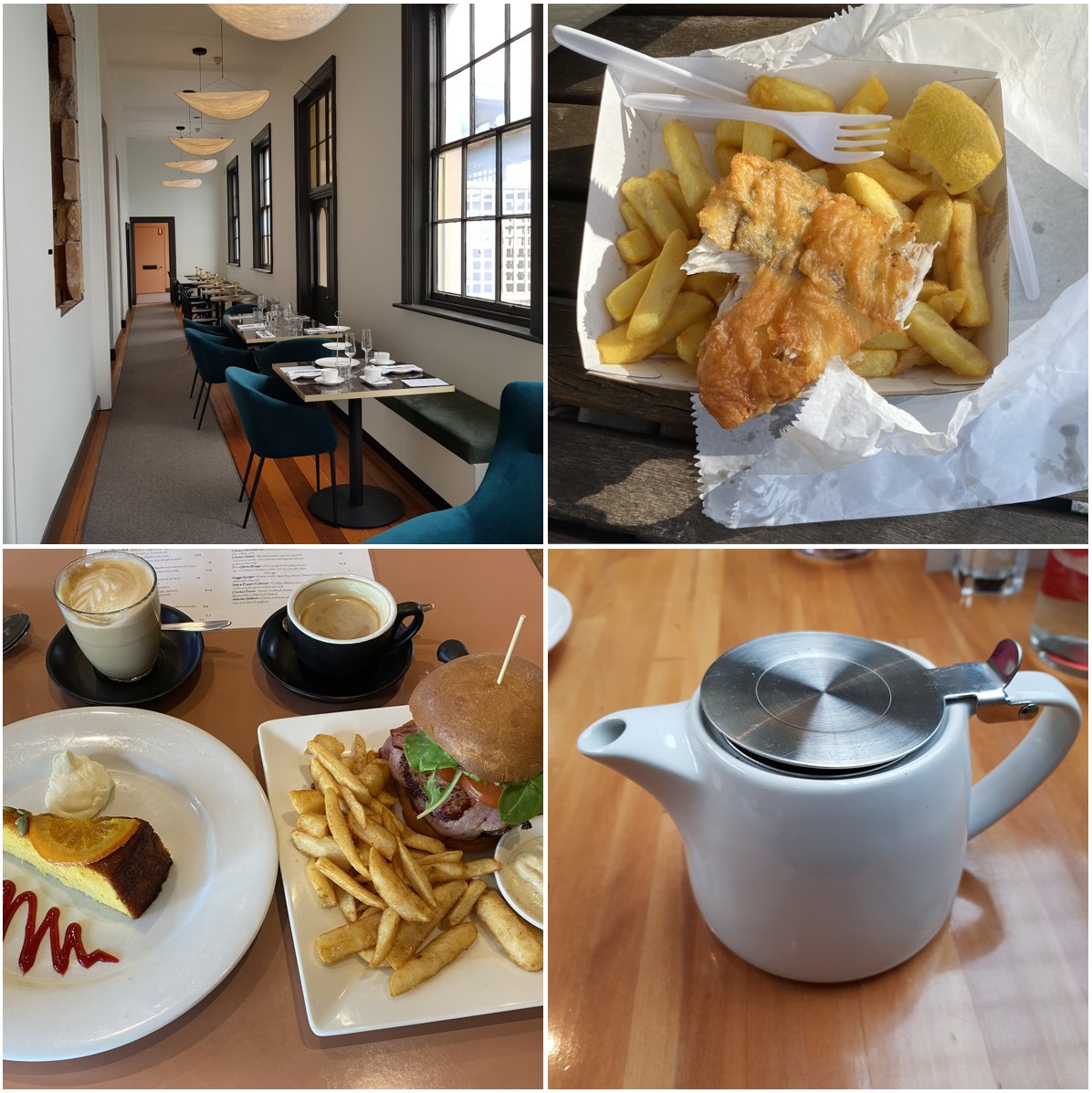
We had been walking all morning, exploring parks, laneways, and other sights as we went.
When we saw the restaurant sign, we were certainly ready for a good meal.
As we walked in, wearing our hiking boots and trousers, and carrying our day packs, we quickly realised that the other diners were more ‘dressed’ for the occasion.
Weekend lunch, it seemed, was a different world.
That said, the staff didn’t miss a beat. No sideways glances, no hesitation.
The service was warm, welcoming, attentive, and genuinely exceptional from start to finish.
The meal itself was also excellent, quite in keeping with a +4-star rating.
When the bill arrived, there was no tip section. No “suggested tip” prompt. Nothing.
We tipped anyway, quite willingly, and without a second thought, simply because the experience had earned it.
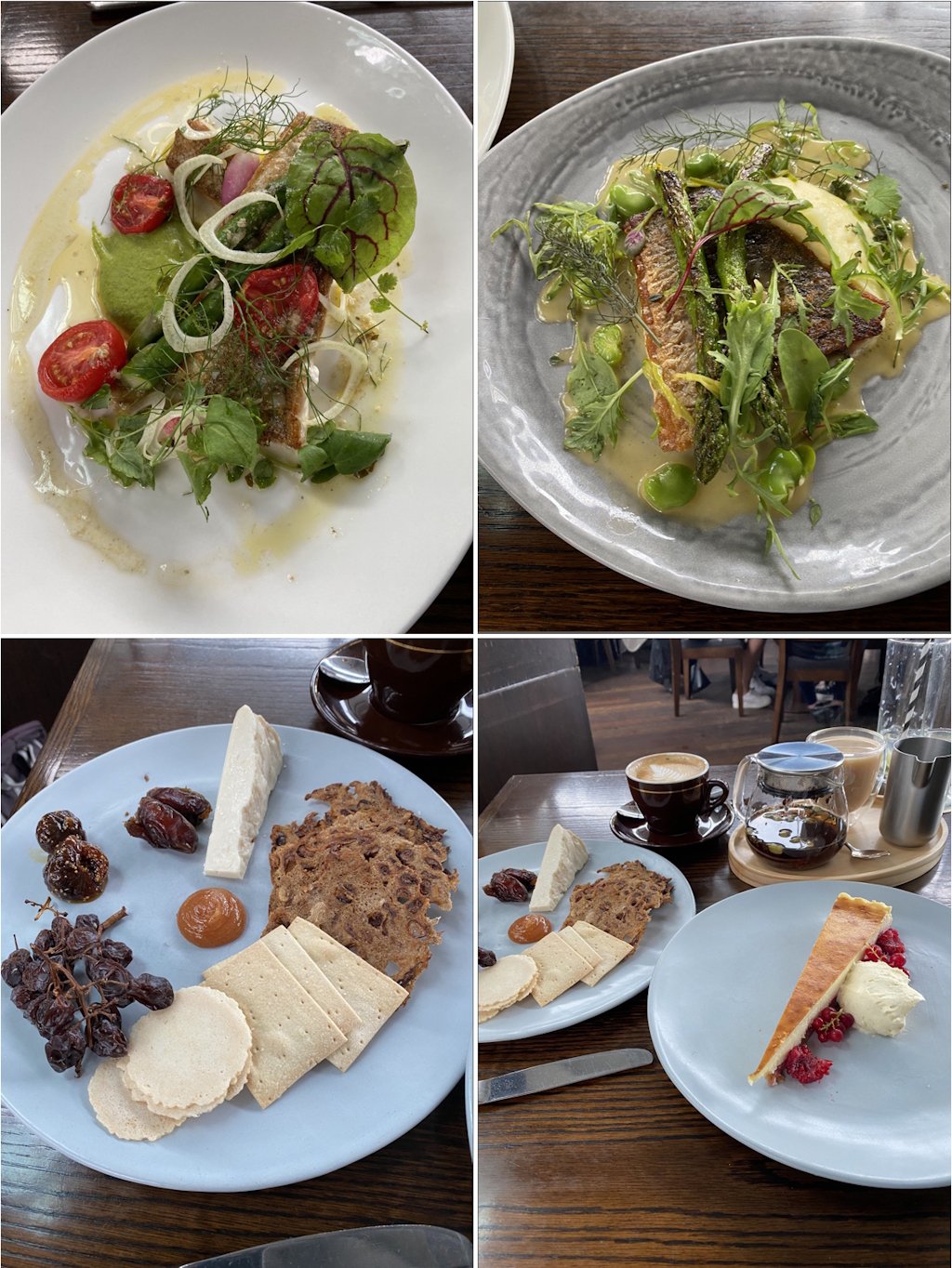
A different city, a different occasion, a different restaurant. This time it was a pizzeria.
The food was good. The service was what you’d expect; pleasant, efficient, no complaints.
The bill arrived, and there it was: a section for a tip, already filled out, and just sitting there quietly, waiting.
Did I tip? No, I did not!
The service had been perfectly fine, but nothing about the experience moved me to reach further into my pocket.
I have been thinking about those two experiences lately, because they capture something that is quietly shifting in the way many Australian restaurants are choosing to operate, particularly in Sydney and Melbourne.
So, if you are visiting Sydney or Melbourne, whether from overseas or from another part of Australia, this is something you need to know, before you sit down at the table.
A Quick Outline
In this Post, we shall explore:
Latest Travel Post
offers more than 21 ideas for Sydney attractions worth visiting during winter, Sydney’s quietest season for tourism (making it also the most affordable season for visitors…)
What Is Actually Changing on the Restaurant Bill
Australia has never had a tipping culture.
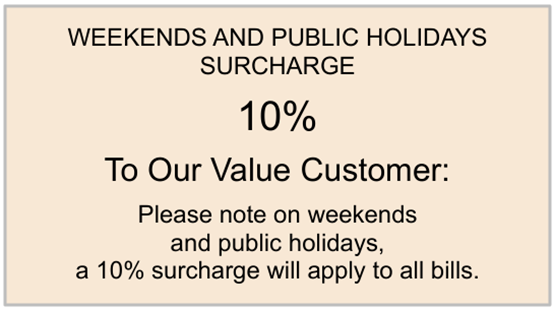
Hospitality workers are (or should be) paid a proper wage. In fact, they are entitled to penalty rates on weekends and public holidays, which is why you will often see a surcharge applied on those days.
That has all been standard practice for some time, and most Australian diners understand it.
What is newer, and what is worth paying attention to, is the quiet, gradual creep of additional charges, that go beyond penalty rates.
Across Sydney and Melbourne in particular, a growing number of restaurants, especially at the higher end of the market, are now adding what are variously described as “service charges”, “gratuities”, or “suggested tips” to bills.
Some apply only on weekends. Others now apply on Fridays. Some apply to larger groups. Some apply every day of the week.
In several cases, these charges are added automatically and will simply appear on your bill for you to pay, unless you notice them and ask that they be removed.
This practice began to attract attention in the immediate post-covid era, and in most cases was quickly withdrawn. However, as the post-covid ‘cost-of-living crisis’ has continued, the practice has resurfaced, as restaurants grapple with rising costs and tighter margins.
The resurgence of adding tips/gratuities/service charges to bills appears to be an initiative of the Australian Restaurant and Cafe Association (ARCA), formed in May 2024. Explanations from ARCA include: “…tipping helped eateries meet rising operating costs…”, and “…it’s to encourage a tipping culture…”.
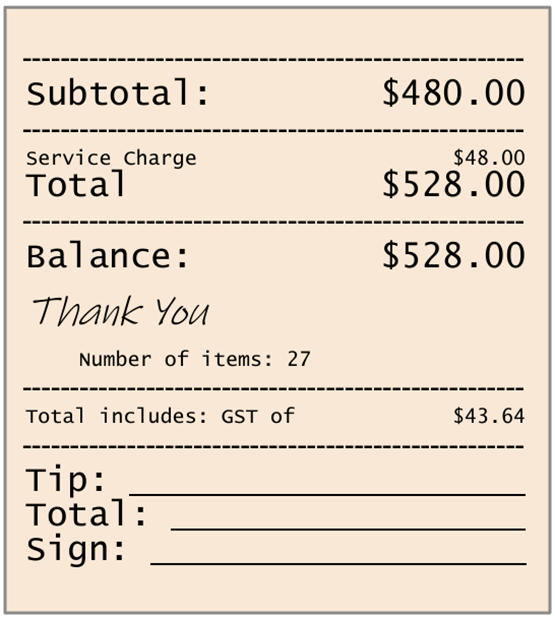
It is apparently more common in higher-end establishments, with a number of Sydney restaurants being identified as early culprits. It is also noted that automatic tipping is more common at eateries popular with international tourists, who would see the practice as ‘more of a norm than an exception’.
One university senior lecturer in economics, finance and marketing, recently noted that reliance on a tip-based model is unlikely to work well in Australia, pointing out that tipping is not ingrained in Australian hospitality culture. She also noted that shifting the responsibility for a fair wage, from employers to diners, is not something most Australians are comfortable with.

The Different Types of Charges, and Why They Exist
It is useful to understand the different charges you may encounter on your restaurant bill, because they are not all about the same thing.
Weekend and Public Holiday Surcharges
These are the most established and widely understood. They exist to cover the penalty rates that staff are legally entitled to on weekends and public holidays.
Typical ranges are between 10% and 15%.
To be legitimate, these surcharges must be displayed prominently where they are clearly visible to customers, usually on the menu.
Friday Surcharges
This is newer.
Some restaurants, initially in Sydney, but also now in Melbourne, have begun applying a surcharge on Fridays (these may also be encountered on other weekdays).
Typically framed around staff retention rather than penalty rates; a 10% service charge on Fridays has been reported at some Sydney establishments.
Once again, Friday surcharges must be displayed where they are clearly visible to customers.
Group Dining Surcharges
A number of restaurants are now applying a surcharge for larger groups, typically of six or more diners. The rationale offered is that larger groups require more staff coordination, more preparation, and more time at the table.
Charges of between 5% and 10% are not uncommon for group bookings. This is also reported to be occurring in Adelaide, and Brisbane.
Group dining surcharges must be displayed prominently for customers.
Automatic Service Charges, Discretionary Tips and Gratuities
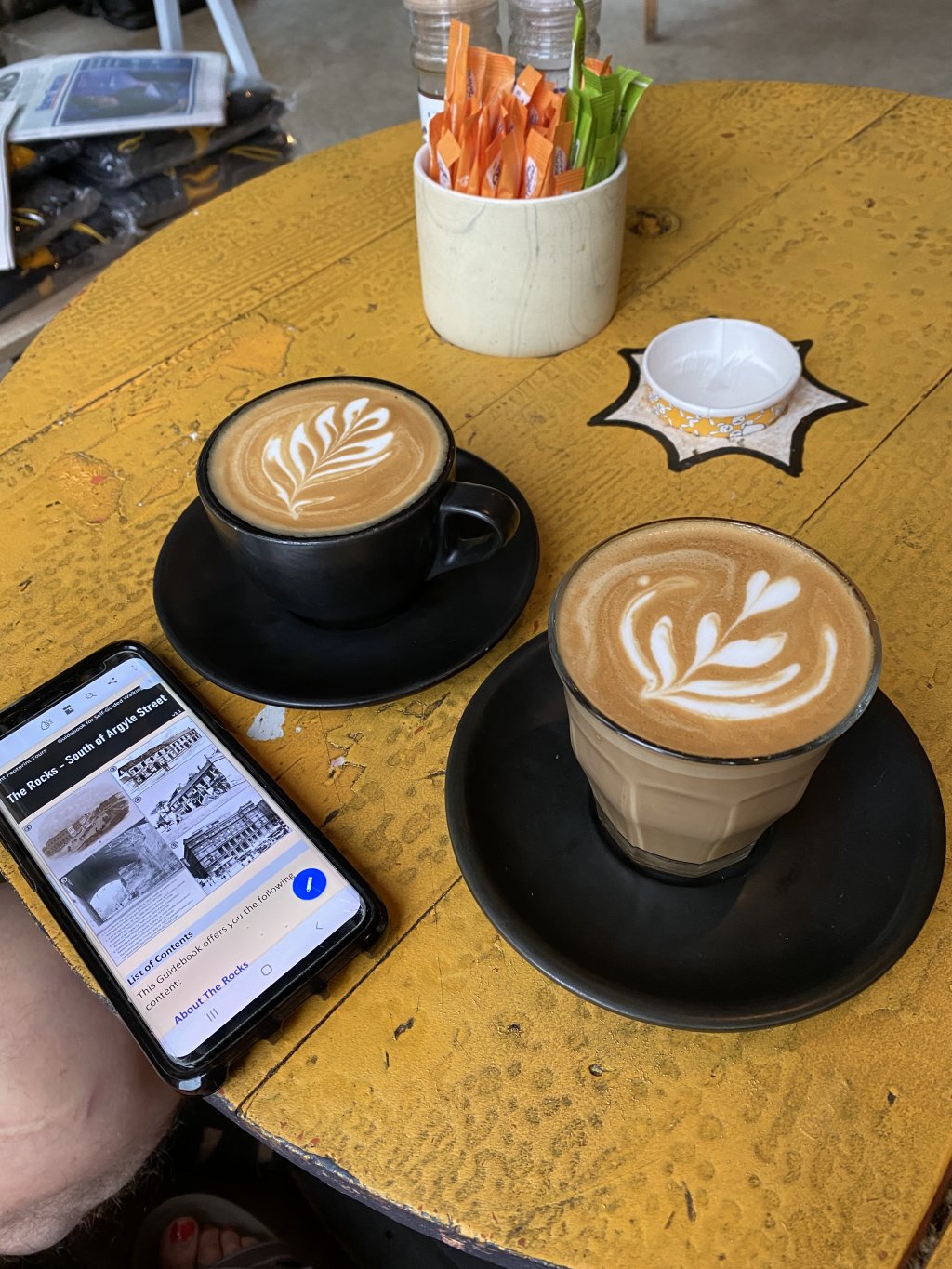
This is the category to watch most carefully:
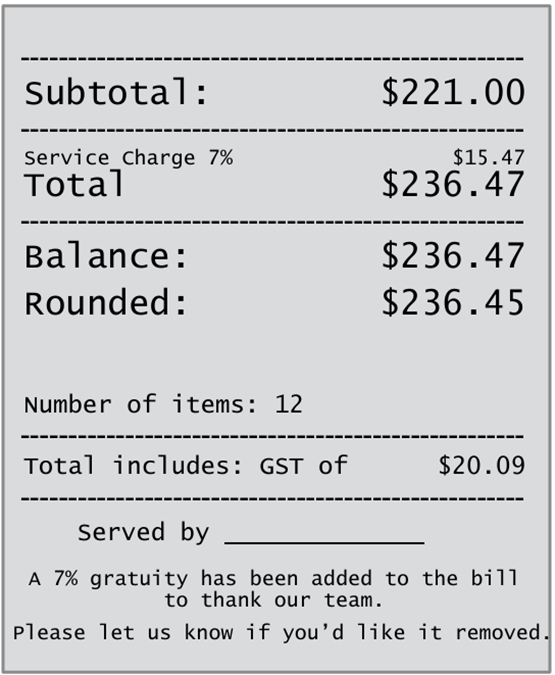
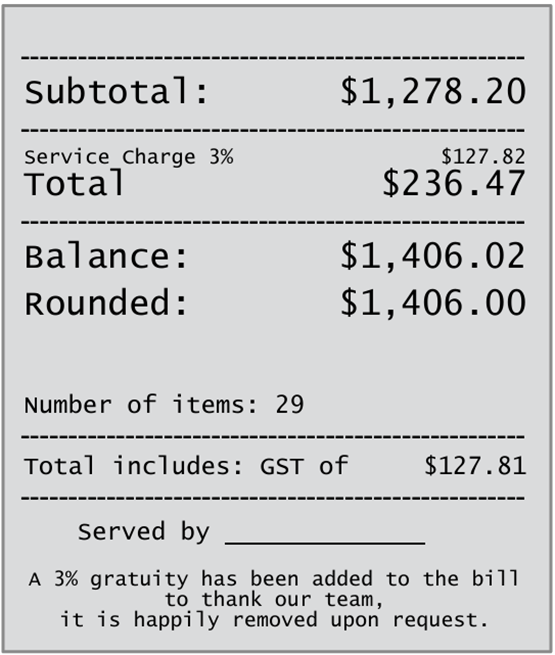
- Some restaurants are now adding a service charge, sometimes as high as 7%, to all dine-in bills, on every day of the week. In keeping with surcharges, these service charges must be displayed where they are clearly visible to customers.
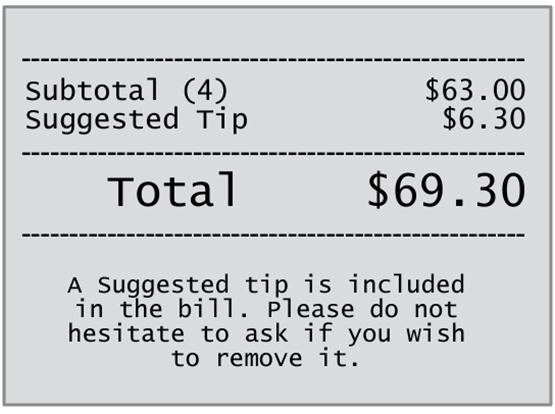
- “Discretionary” tips and gratuities may also be added, possibly labelled as “suggested tip”. These are usually accompanied by a note indicating it is “removeable upon request”. The catch is that if you are not paying close attention, you may not notice them at all. Note that the distribution of tips/gratuities is entirely at the discretion of the establishment; in many cases the distribution method is not made clear.
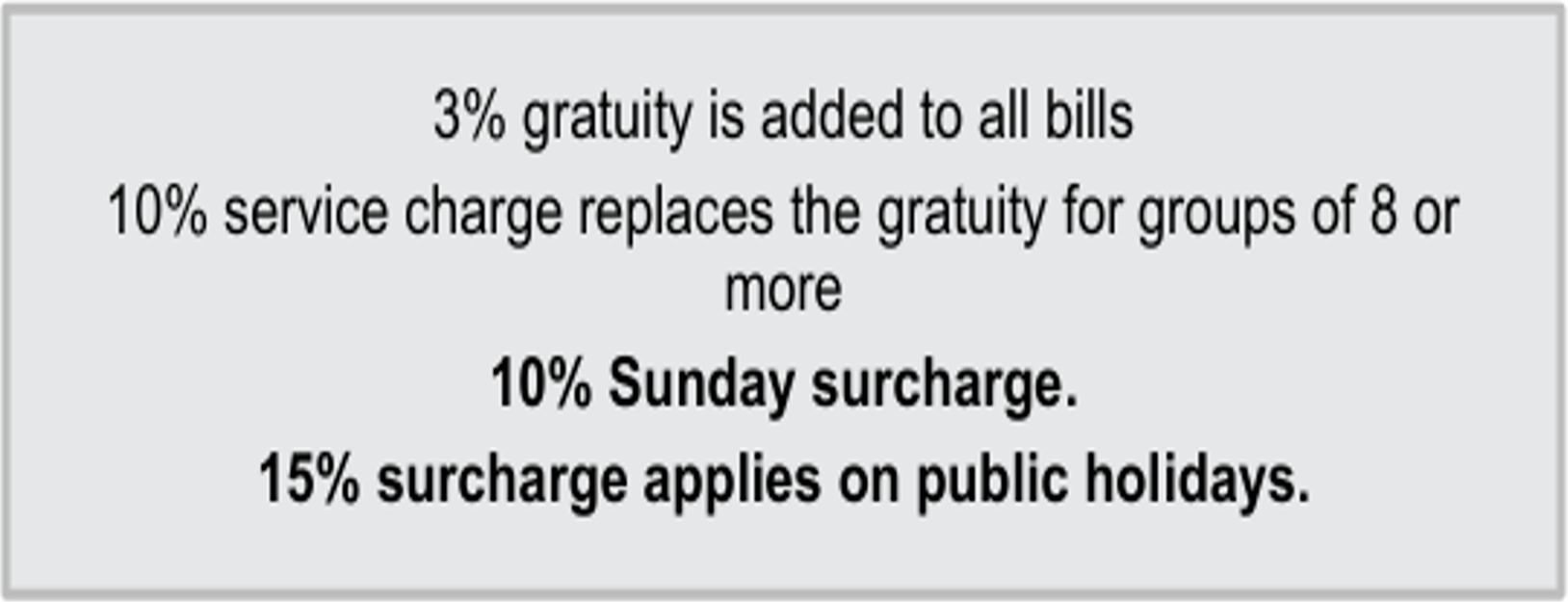
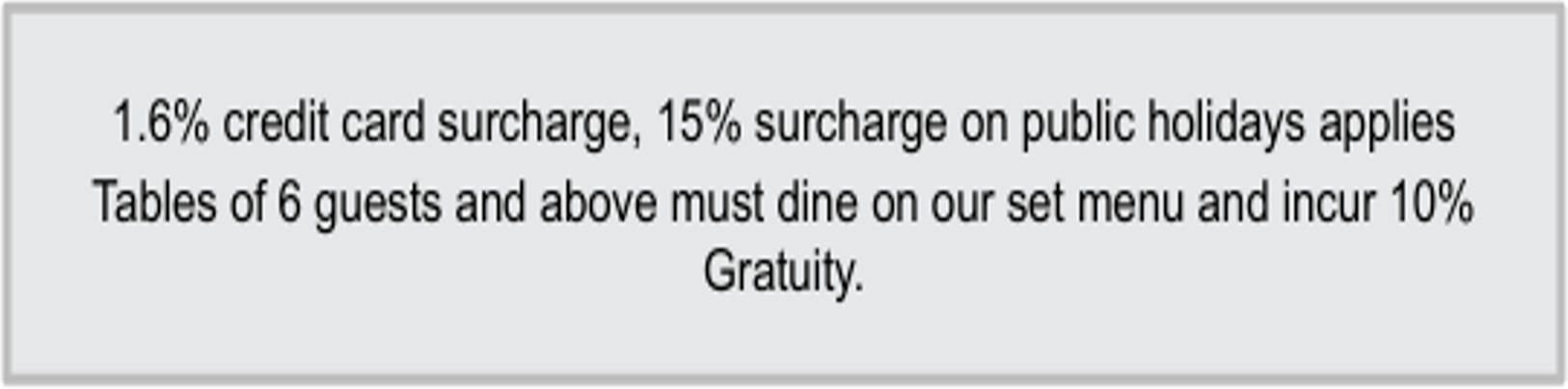
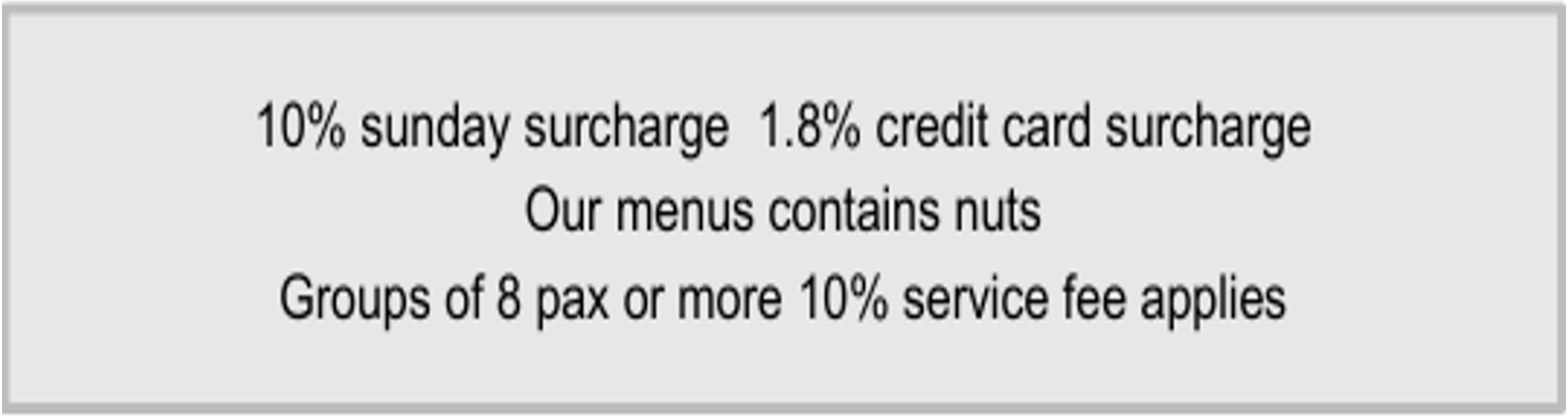
Card Surcharges
Until 1 October 2026, businesses are legally allowed to charge surcharges on card payments, provided they are clearly and prominently disclosed. As of 1 October 2026, businesses will no longer be allowed to apply surcharges to Visa, Mastercard, and eftpos transactions.
Other Surcharges
In recent times, since the Middle East conflict disrupted global oil supplies, fuel levies and similar charges have been reported at some venues, applied daily to cover rising operating costs. Any surcharges must be clearly visible to customers.

What Is Discretionary — and What That Means for You
Under Australian consumer law, any surcharge must be displayed prominently, such as on the menu, on a sign at the counter, or on the reservations platform, before you make a decision to order.
Businesses are not permitted to mislead consumers about what they will be charged or why. In practice, this means the information is there if you look for it; but it is not always presented in a way that draws your attention to it.
Here is what you can do:
Before you book , check the restaurant’s website or reservations platform for any mention of surcharges. They are required to disclose them.When you are seated , check the menu. Any surcharge must appear in text at least as prominent as the prices on the menu. If you see a note about a service charge or surcharge, you will know what to expect.When the bill arrives , read it carefully before you pay. If a service charge has been automatically added, you are entitled to ask for it to be removed. In most cases, staff will do so without issue.If an undisclosed surcharge has been included , you can request that it be removed from the billIn the event of a dispute , your obligation is to pay the price that was prominently displayed when you orderedIf you have any complaints , these can be reported to the state or territory consumer affairs agency, or to the ACCC.If you want to tip , do so because you want to do that, not because a field on the bill is prompting you. Giving a tip for genuinely excellent or exceptional service is always your call. An automatic charge on an average meal is something quite different.If a service charge is already included in your bill , there is no need to give a tip on top of this.

Your Take-outs
- Australia does not have a tipping culture, and tipping remains entirely voluntary. You are never obliged to tip.
- Surcharges of various kinds (weekends, public holidays, Fridays, group dining), and also automatic service charges, are becoming more common, particularly in Sydney and Melbourne, and more commonly at higher-end restaurants.
- All surcharges are required by law to be disclosed prominently before you order. If a charge appears on your bill that was not disclosed, you have grounds to question it.
- Automatic service charges are actually discretionary (tips/gratuities), and can generally be removed on request.
- The most effective approach is simply to do your research before you book, read the menu when you are seated, and study your bill before you pay.
Dining out in Australia’s cities (not just Sydney and Melbourne) can be a genuinely wonderful experience. With many accomplished chefs throughout the country, the food is excellent, the settings are often beautiful, and the service, when it is good, is very good indeed.
That said, going in with your eyes open about what may appear on the bill, means you can enjoy every part of the experience, right to the end.

…
…
Your Feedback, please…
Firstly, my thanks to you, for reading my post.
Now, the really BIG question is:
“What value has this Post offered you? “
Has it helped you, or do you need more information?
If you wish to offer some feedback, or to read the feedback from others, please follow the link below to the Feedback Page:
Why Your Feedback is Important to Me
In real life, I am an agile Change Manager, so I know that feedback is an essential part of the improvement process.
Your feedback can help me improve both the content of this Post, and also of future Posts.
If you have a thought, or a question, about the post content, or if you would like to provide feedback about something else, please follow the link to the Feedback Page.
I do look forward to hearing from you, especially if we can make improvements that will help fellow travelers on the road.
Marlene
Please note, before any feedback is posted, it will be moderated. When I am moderating, I may need to contact you, which is why I ask for your email address.
Your email address will
Here is a link to the my afootwego.com CONDITIONS for POST FEEDBACK (2½ mins to read).
Should you wish to peruse them, here are links to my afootwego.com PRIVACY POLICY and Website TERMS and CONDITIONS of USE.
Jet Lag – How We Can Manage It
Daily Routine & Travel – NOT Friends
Fitness for Travel – Let’s Just Do It!
Costs & Budgets – Keeping a Balance
Hydration – It Keeps Us Alive and Well
- NOTE:
- This site is specifically designed for responsive display on a mobile device
On devices with wider screens, it will appear as a single, center-aligned column