afootwego-03-nutrition-food-for-travellers
afootwego Nutrition – Food for Travellers On The Go
…for people who love to walk…
Supporting Mindful and Responsible Travel
Nutrition – Food for Travellers On The Go offers insights into the needs of travellers, and pitfalls they can face, while the are ‘on the go’
Nutrition – Food for Travellers On The Go
Feb 2026
12½
Travel can easily disrupt our dietary routine, and our digestive system. The effects of this can cause all manner of discomforts.
To maintain our health when we are travelling, and to reduce the chances of becoming ill, we need the eat the right sorts of foods.
A Quick Outline
In this Post, we shall explore:
Food – Something We can ALL Enjoy
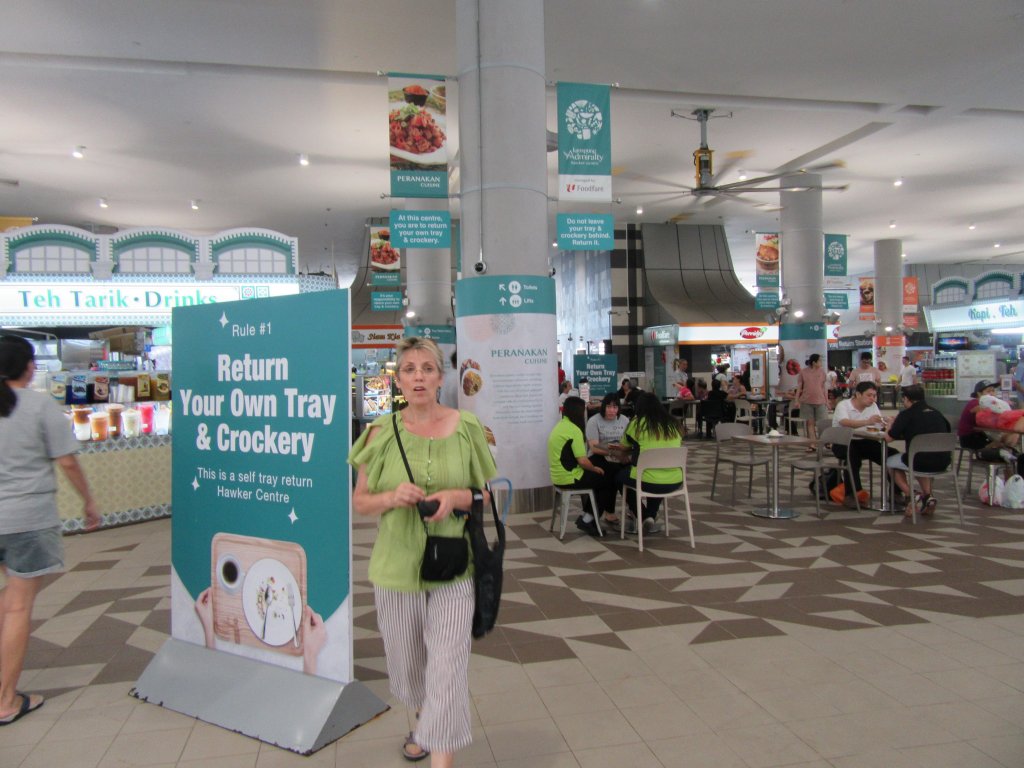
Few things in life awaken all my five senses, but food certainly is one!
From shaping biscuits on a tray, to hearing food sizzling in a pan, to catching the aroma of spice dishes, and then seeing a mouth-watering delicacy in front of me, it all screams out ‘eat me’! And, of course, I comply…oh, the delight!
Food and travel are like peas in a pod, they just ‘fit’ together. Who doesn’t want to sample some local cuisine at each destination stop? I certainly do, it’s something I look forward to (although I’ll skip the insects, thanks!).
When it comes to nutrition while I am travelling, I (try to) apply the same guidelines that I follow at home. A balance of seasonal fresh vegetables, fruits, nuts, etc. for fibre (or fiber), along with some form of protein.
However, I personally find much of the available online ‘health advice’ to be contradictory, patently biased, and therefore confusing. Perhaps only time will tell whether I am killing myself with my diet, or not?
Our Food ‘On The Go’ can be a Lottery
Now, let’s come back to earth for a
moment. When we are travelling, none of us are ever totally immune to ‘the traveller’s curse’ of diarrhoea and vomiting. In fact, for most of us, much of the time, it’s only one ‘slip-up’ away (See: Food Safety – What We Must Know When Travelling –
With that short advertorial out of the way, let’s note that travel can bring another hazard across our pathway. It inevitably causes changes in our regular patterns of eating and drinking, which can then have an impact on our digestive system.
And, once at our destination, and in ‘holiday mode’, we might also opt to indulge in some of the ‘naughty’ things that we avoid, or are ‘restrained’ about, at home. Be this in the form of food, drink, late nights, missing exercise, etc., our routine, if we have one, is broken.
Depending on how we are travelling, the nutritional value of our food ‘on the go’ can vary immensely. Cruising usually means a great array of enticing options, including delicacies and treats aplenty. On the other hand, back-packing may mean local fast-food options, some healthy, some not. If we are burning the calories on a regular basis, a little indulging should not hurt us.
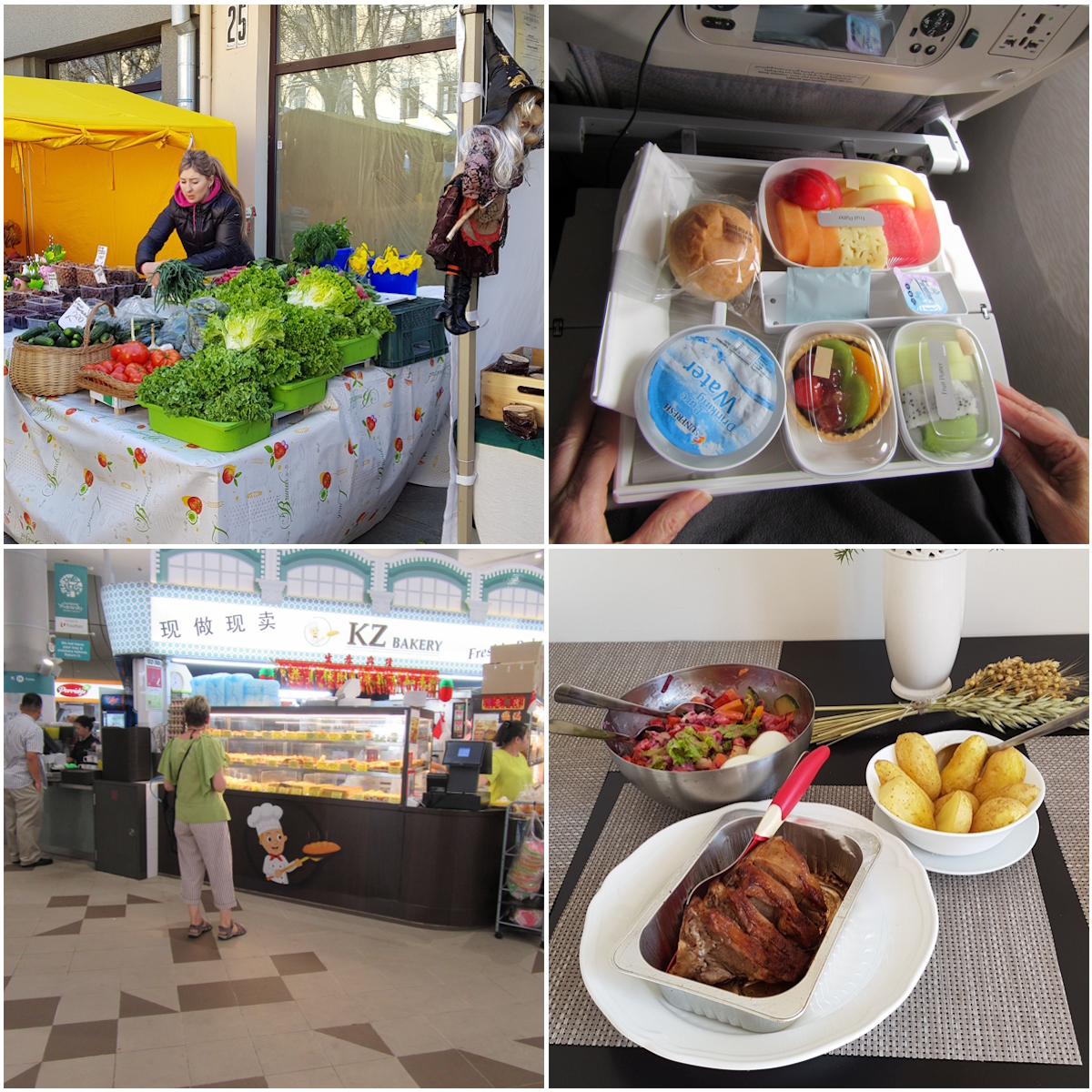
Sometimes our body, or perhaps our stomach, will tell us what it needs. Some years ago, I was in Tallinn, in mid-April, after about 4 weeks of travelling across the Baltic States. At the market, I spied some fresh, green spinach.
As northern Europe was coming out of winter, it seemed that I had not eaten fresh greens for so long. My dinner that evening consisted of a huge plate of beautiful sautéed spinach with pine nuts, along with some fresh local bread, and that was it – nothing else!
Effects of Changing Our Meal Patterns
As travellers, our long-haul flight/s to our destination will be doing more than just causing us some jet lag. Some extent of dehydration is a certainty, from the dry air of the aircraft cabin.
Another scenario that will occur on many long-haul is disruption to our intake of fibre and fluids, caused by the timings for our in-flight meals. These changes can cause problems with our ‘system’.
When we eat at times out of keeping with our usual meal pattern, our digestive system is not ‘expecting’ food, and nor are we likely to actually need food.
Depending on what we are eating, if our body does not need food at that time, it is likely to store the excess calories as fat. Along with the effects of dehydration, before we know it, our ‘healthy regularity’ is compromised. Now, we are heading towards constipation, which is a common condition for many travellers.
There is also evidence that changes in our meal times can affect our circadian rhythm, which can impact our jet lag recovery.
Perhaps the ‘bottom line’ here is that when we are travelling, to maintain our health, and reduce the chances of getting really sick, we need to eat the right sorts of foods. Let’s take a closer look at in-flight food, and also three aspects of destination food: market food, street food, and dairy foods.
In-flight Food – How Good (or Bad) is it?
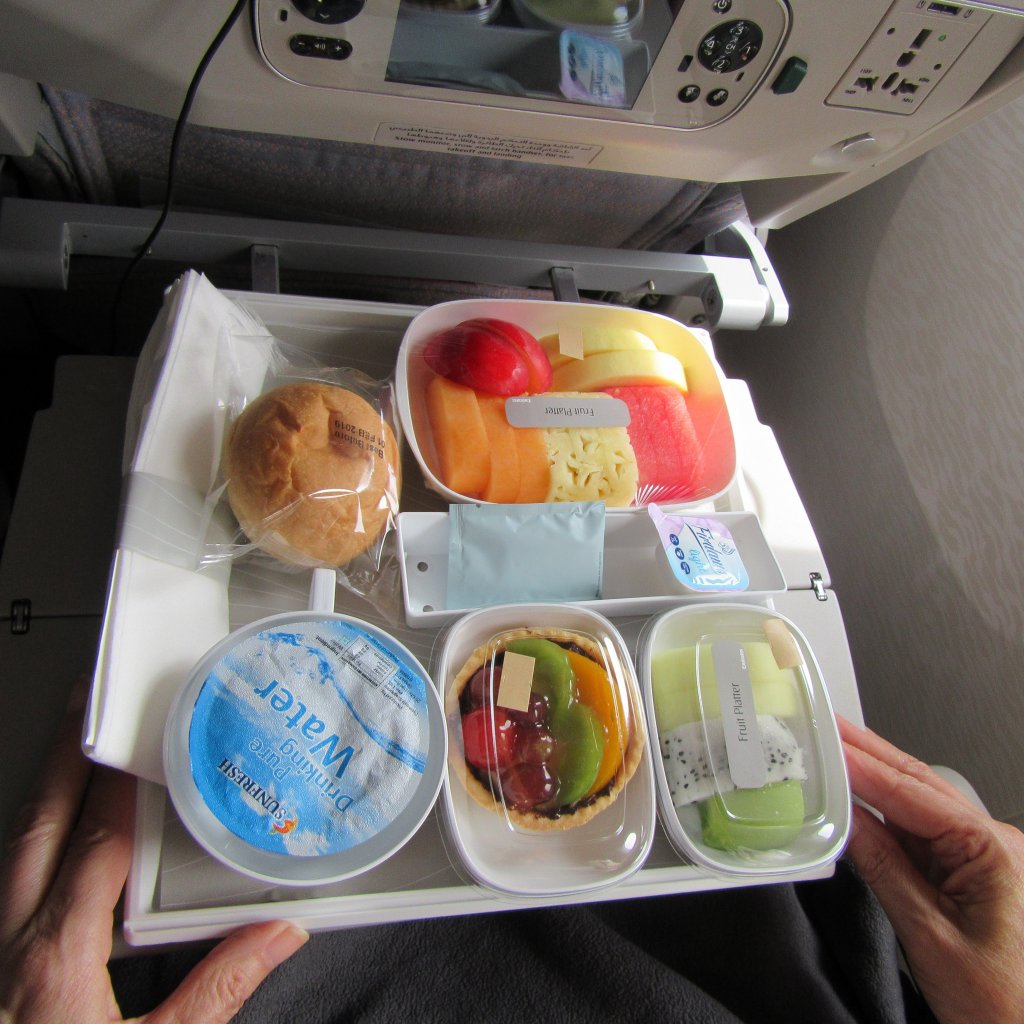
Have you ever found that your food tastes better on the ground, than it does in the air?
At higher altitudes, apparently we lose about 30% of our taste sensation. Who would have thought that? Supposedly, it’s from a combination of drier air, lower air pressure, and even the cabin noise, which all affects our ability to taste sweet and salty foods.
So, to make in-flight food taste good, it needs an increase in its sugar, salt, and fat content. A science reporter advised: “Airline chefs now compensate for this by slightly increasing the level of salty and sweet ingredients.”
I’m pleased to note some airlines are finding alternatives to sugar and salt, by adding fresh herbs, oils, fruits and other bold flavours to stop the food tasting so bland. And, most long-haul airlines do provide an option for passengers who have allergies, dietary requirements, or religious observances.
Following a bad experience with ‘the traveller’s curse’ on a long-haul flight, I now opt to select my meals during the booking process (when I can). My preference is for a fruit platter, which usually contains local in-season fruits (pineapple, watermelon, etc.).
Many of these are high in fibre, and also in vitamins and natural sugars. They are easily digestible, so they are less likely to cause altitude bloating. Finally, they are also great for hydration.


Destination Food – Discovering the Local Favourites
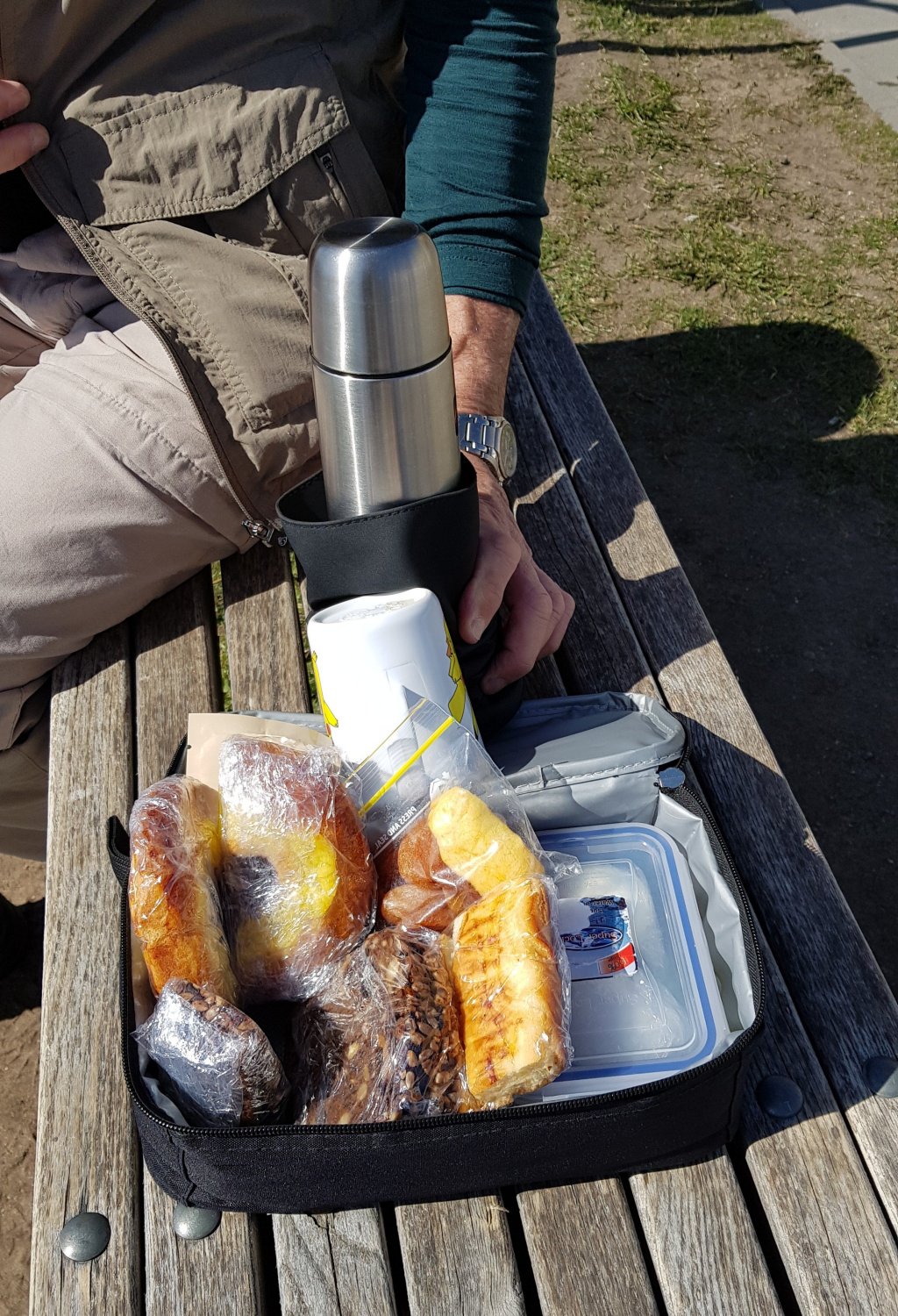
I am fully aware that while travelling, eating healthy is very important. However, I especially love cakes and desserts, and can always be tempted! At times, I can still hear my military PT instructor saying: "Ladies, we are what we eat. Now let’s turn that into muscle!"
When staying in a hotel, or eating in restaurants, it is possible to eat healthy. However, we do need to be aware that the food is likely to contain lashings of ingredients such as butter, cream, salt, and sugar! That’s the secret to the delicious taste.
On my travels, I really like to walk, and see places at my own pace. Some days, my step-count exceeds 30,000. With that comes a need for good meals, to give me the energy I need.
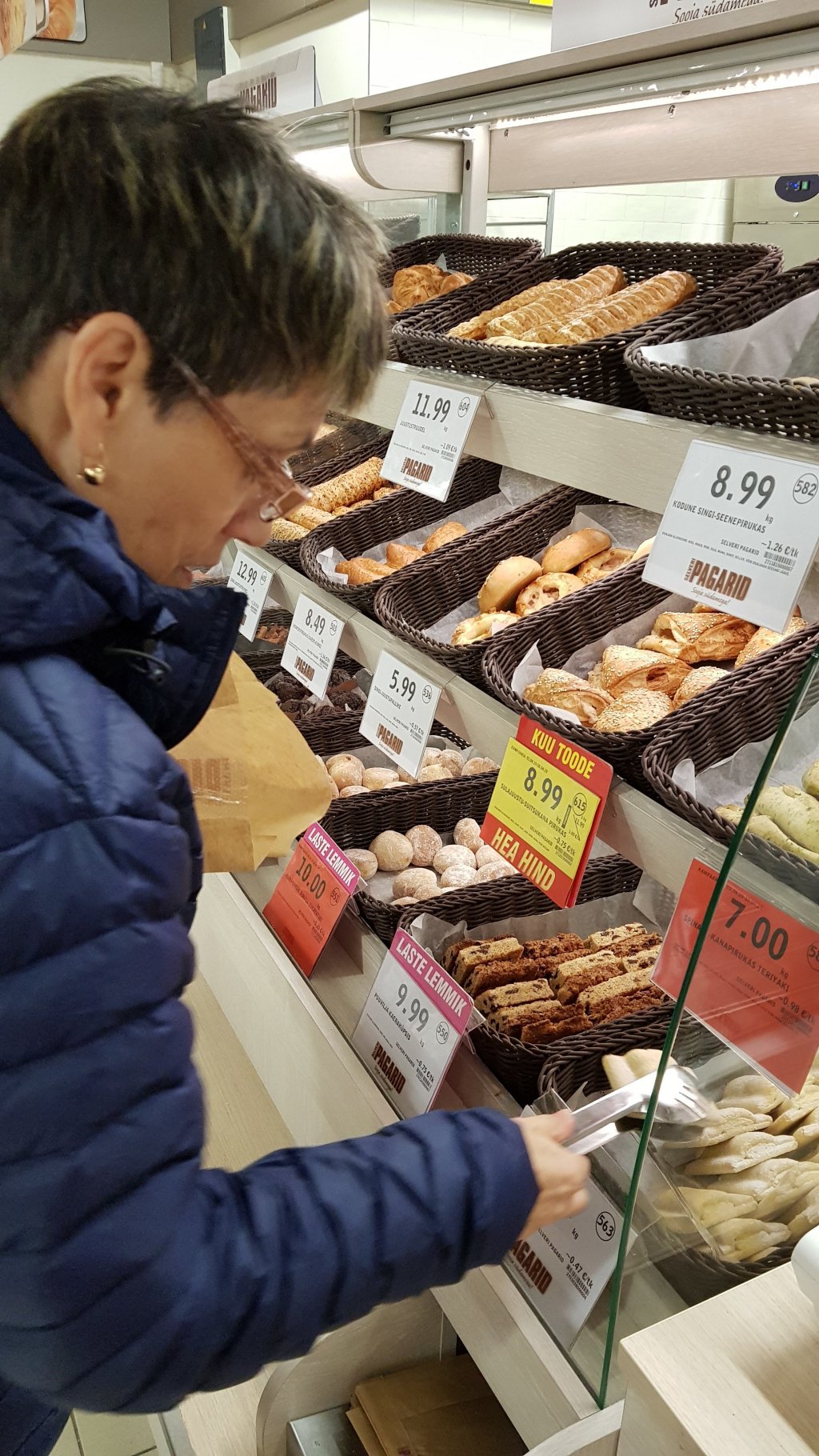
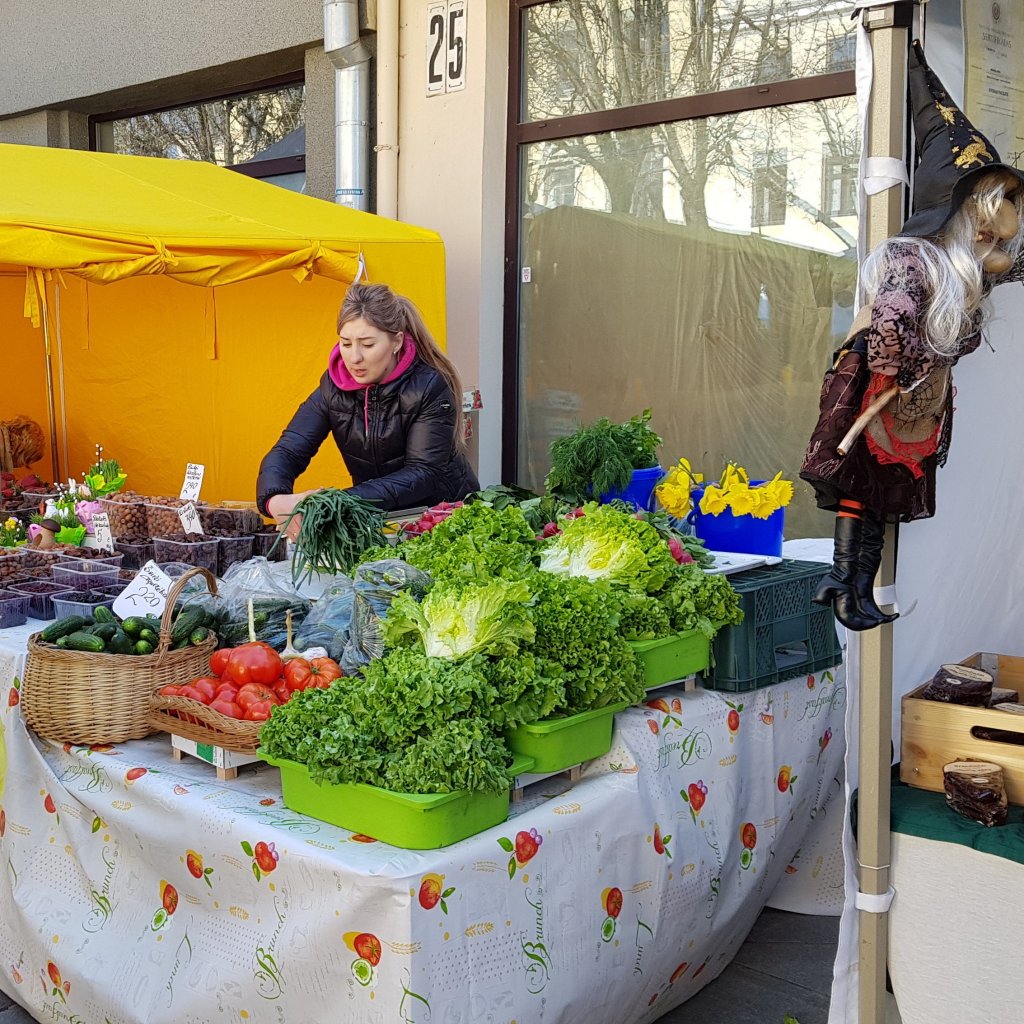
I usually seek out accommodation that offers a kitchenette, so I can prepare and cook my meals. I also love to visit the local produce markets and neighbourhood grocers, where I try my best to ‘shop like a local’. This means that I have the opportunity to enjoy healthy (and usually less costly) meals.
When I am in a destination where English is not common, I rely on ‘Google Translate’ to help with my shopping. Sometimes, this can have hilarious consequences. In the early days of this service, I wanted to know what “fustolt fott” on an item meant, while at a grocery in Budapest.
According to Google, it was “f^*~ed potty”. Being none the wiser, I recall that I passed on that item – after I regained my composure (I later found I had been looking at smoked pork loin – actually, Google had given me the translation from Luxembourgish?).


Market Food
On arrival in a new destination, I like to head straight to the local market. The produce section tells me a lot about the city, its people, and its economic health. I take note of the cost of staples, including popular fruits and vegetables, breads, cuts of meats, poultry and fish.
Street Food
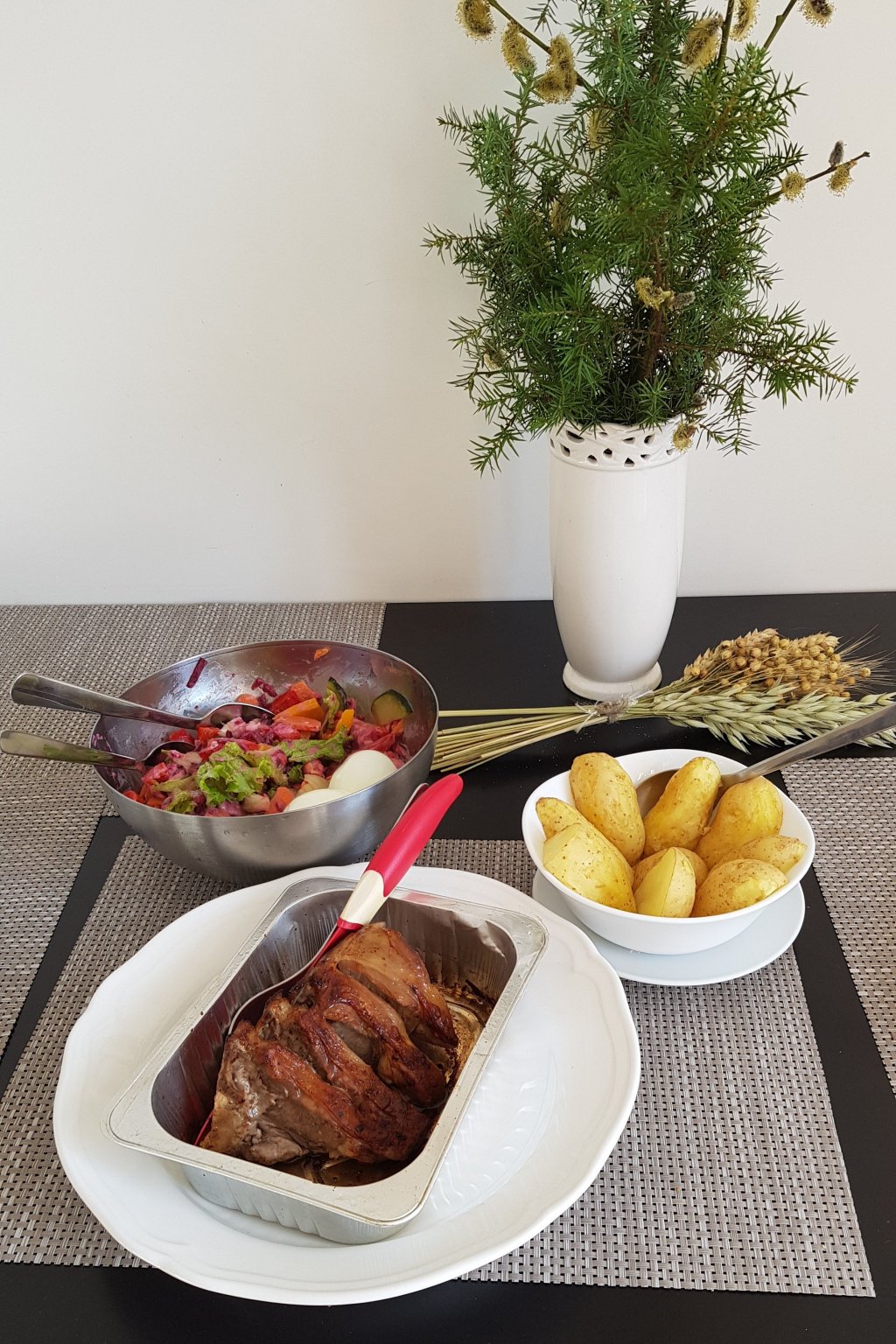
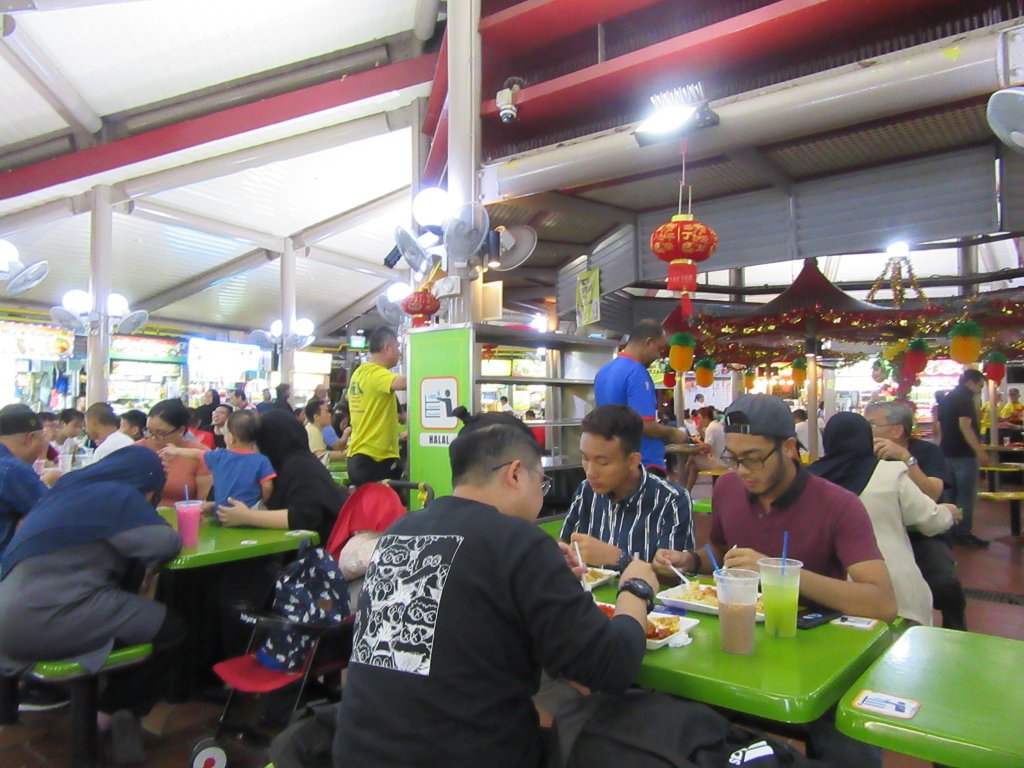
Food stalls on the street are often one of the easiest and most popular ways of tasting local delights. As a visitor to a destination, I apply the rule of ‘follow the crowd’ when it comes to street food (and also to market food).
Dairy Foods
As an ANZAC, I love cheese, and I do enjoy tasting the various local cheeses that are available in different destinations. Cheese is a great source of calcium, fat, protein, vitamins A and B12, zinc, phosphorus, and riboflavin. When travelling, I tend to avoid the softer cheeses. As these contain more moisture than harder cheeses, if they are not stored correctly, they can be an ideal environment for bugs, such as listeria
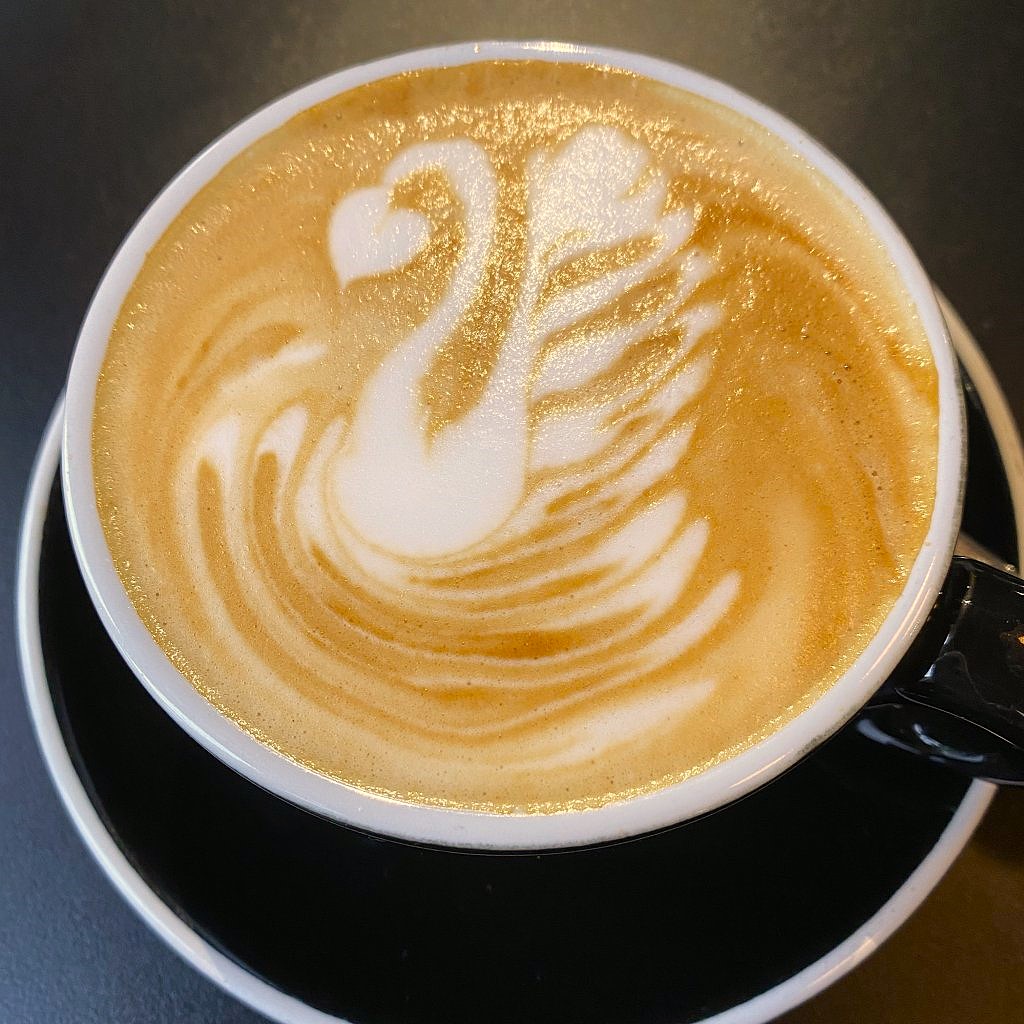
Keeping a Dietary Routine when Travelling
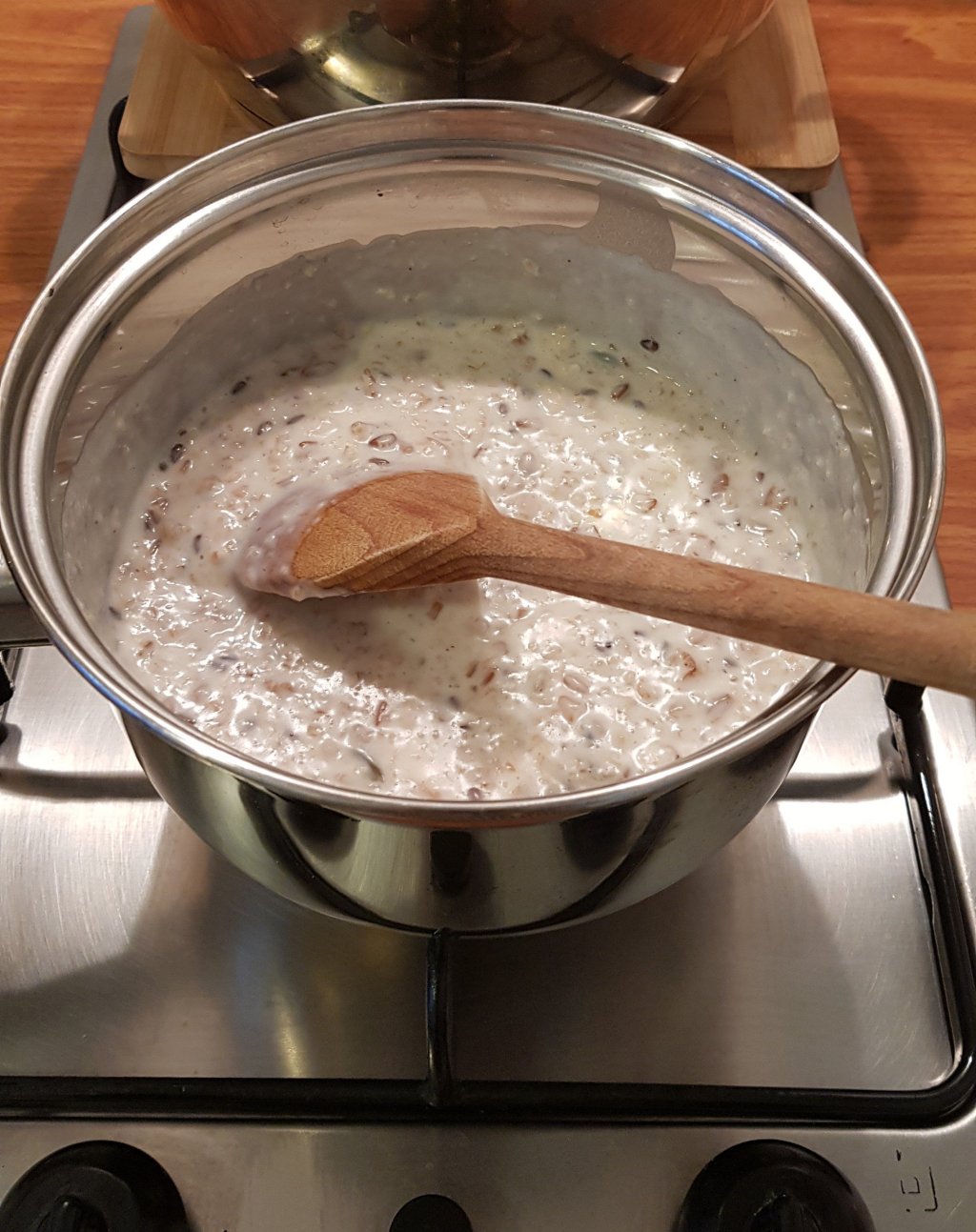
My first BIG rule for my travelling diet is “begin with fibre and fluid”. And my second BIG rule is “don’t EVER skip breakfast”.
Many health experts support the notion that breakfast is the most important meal of the day. Unless you are an Australian, that is!? According to some 2018 research by a certain Melbourne university, skipping breakfast is no big deal ?!
When I am travelling, my days are usually filled with activity, sometimes lots of it, unless I am in transit between destinations. Even though I am Australian, and from Melbourne, I find that a healthy and nutritious breakfast provides me the energy that I need, to meet the early demands of the day.
Breakfast rituals
My usual ‘early’ breakfast is based on oats, with fresh fruit and yoghurt. Most days, I take that at around 06:00 am. On days that I am not in transit, I like to get out and explore for an hour or two. Sometimes, that coincides with the morning ‘golden hour’ for photographs.
Usually, sometime between 9 and 10am, like the Hobbits from ‘The Lord of the Rings’, I prepare my second breakfast. This often includes some form of protein, such as eggs, along with carbohydrates. Having re-filled my boiler, I am ready for my second round of exploring. This can be for a duration of several hours, and will usually involve more walking.
Lunch ‘On The Go’
I often carry a pack lunch with me, plus a selection of snacks, such as dried fruit and nuts, protein bars, dark chocolate, etc. Lunch will contain protein and fibre, depending on the season it might be hot, or cold.
Snack-time is usually about every 2 hours, meaning that I don’t get to feel like I am starving. The point of the snack is to take it before I actually need it, otherwise I am likely to want to devour whatever I can get my hands on!

Main meal of the day
By custom, my daily main meal is taken in the early part of the evening, and I usually follow this routine when I am travelling. Most days, by the end of the afternoon, I have walked quite a distance, and so I am quite famished and looking forward to a hearty meal. By eating early, I am also able to put in a night excursion of some sort.
My travelling partner often reminds me how, in our military days, the main meal of the day was taken at lunch time. This was because of the amount of energy being expended in activities during the afternoon, which is not unlike my program when I am travelling.
Over the years, I have slipped away from that regimen (Perhaps because my post-military profession is mainly sedentary, and a big lunch tends to make me want to take a nap!).
Variations to the routine
There are times when I am travelling that I do switch and take my main meal at lunchtime. This is when I am eating out, rather than preparing my own meal. For various reasons, lunchtime meal costs can often be lower than for evening meals, particularly in places where city workers look to purchase their lunch meals. This is something to be aware of, as it can help with balancing the travel budget.
Whether we take our main meal at lunch or in the evening, and whether we are eating out or eating in, the main meal is the one that should include plenty of vegetables. We know these are low in fat and calories. None have cholesterol, and all are important sources of many nutrients, including potassium, dietary fibre, folic acid, vitamin A, and vitamin C.
During the winter months (in particular), I also try to eat foods that contain vitamin D, which will help supplement that which my body usually gains from exposure to sunlight. Vitamin D is found in fatty fish (salmon, tuna, sardines), in egg yolks, and in cod liver oil.
Finally, I try to avoid taking a full meal later at night, say, within two hours of bedtime. Research suggests that our bodies can process food more efficiently during the day. While this work is not yet conclusive, it does seem that it’s not only what we eat that matters, but also when we eat is important.
Jet Lag – How We Can Manage It
Daily Routine & Travel – NOT Friends
Fitness for Travel – Let’s Just Do It!
Costs & Budgets – Keeping a Balance
Your Take-outs
The good news is, when we are travelling, with some simple food planning we can arrive at each destination along the way in great shape, and have a fabulous time! Here are some take-outs about Nutrition ‘on the go’:
- travelling can easily disrupt our dietary routine, and our digestive system – the effects of this can cause all manner of discomforts, and might take a while to pass!
- airline food, and restaurant/café food, is likely to be laced with sugar, salt, cream, butter, to enhance the taste – it’s delicious, but too much can be deadly!
- sampling local cuisine is part of the travel experience – but before we indulge, we should take a moment to consider our food safety, and avoid the ‘travellers curse’
- if we are particularly ‘active’ when we travel, we need to be kind to our body along the way – be sure to include a balance of fibre, protein, carbohydrates, and fluid in our diet
- during winter, when sunlight is limited, taking foods rich in vitamin D can help to reduce any deficiency levels
Your Feedback, please…
Firstly, my thanks to you, for reading my post.
Now, the really BIG question is:
“What value has this Post offered you? “
Has it helped you, or do you need more information?
If you wish to offer some feedback, or to read the feedback from others, please follow the link below to the Feedback Page:
Why Your Feedback is Important to Me
In real life, I am an agile Change Manager, so I know that feedback is an essential part of the improvement process.
Your feedback can help me improve both the content of this Post, and also of future Posts.
If you have a thought, or a question, about the post content, or if you would like to provide feedback about something else, please follow the link to the Feedback Page.
I do look forward to hearing from you, especially if we can make improvements that will help fellow travelers on the road.
Marlene
Please note, before any feedback is posted, it will be moderated. When I am moderating, I may need to contact you, which is why I ask for your email address.
Your email address will
Here is a link to the my afootwego.com CONDITIONS for POST FEEDBACK (2½ mins to read).
Should you wish to peruse them, here are links to my afootwego.com PRIVACY POLICY and Website TERMS and CONDITIONS of USE.
We are what we eat –
for
- NOTE:
- This site is specifically designed for responsive display on a mobile device
On devices with wider screens, it will appear as a single, center-aligned column